How Gemstone Size Affects Price: Why Larger Gemstones Are More Valuable
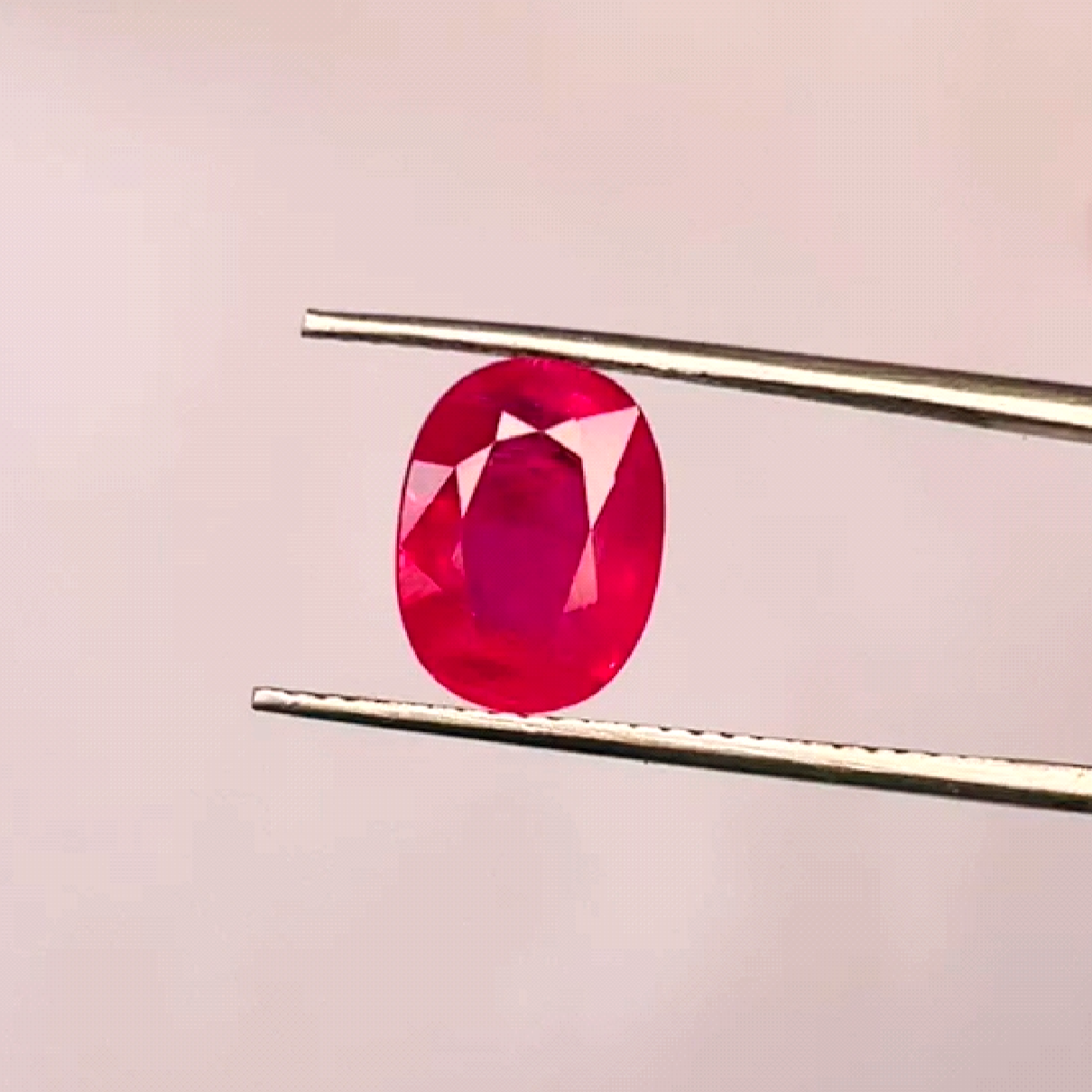
Gemstone size plays a critical role in determining price, rarity, and demand in the gemstone market. While many buyers initially focus on appearance or type of stone, professionals understand that size directly impacts value in a much deeper way. As gemstone size increases, the rarity increases significantly, and this leads to a sharp rise in price. This is not a simple increase — it is exponential.
A larger gemstone is not just a bigger version of a smaller one. It represents something far more difficult to find in nature. This is why even a small increase in size can result in a massive increase in price.
Carat Weight and Its Direct Impact on Price
Gemstone size is measured in carats, and carat weight is one of the primary pricing factors. However, unlike common assumptions, gemstone pricing does not increase linearly with weight. Instead, the price per carat increases as the size increases.
For example, a one-carat gemstone may have a certain value per carat, but a two-carat gemstone of the same quality will usually have a much higher price per carat. This means the total price of the two-carat stone will be far more than double the price of the one-carat stone.
This pricing pattern exists because larger gemstones are much harder to find. The supply decreases sharply as size increases, while demand continues to rise.
Rarity Increases With Size
The most important reason why larger gemstones are more expensive is rarity. In natural conditions, gemstones form under extreme pressure and temperature over long periods. Most gemstones do not grow large enough to produce big, clean crystals.
As the size increases, the probability of finding a gemstone with good color, clarity, and structure decreases. Larger stones are more likely to have inclusions, cracks, or imperfections. Finding a gemstone that is both large and high quality is extremely rare.
This rarity is what drives high prices. The gemstone market rewards scarcity, and large gemstones represent one of the highest levels of scarcity.
Demand for Larger Gemstones
Demand plays a major role in pricing, and larger gemstones consistently attract higher demand. Buyers often associate larger stones with luxury, status, and exclusivity. This psychological factor increases their desirability.
Collectors and investors especially prefer larger gemstones because they are harder to replace and hold stronger long-term value. Jewelry buyers also prefer larger stones because they are more visually impressive and stand out more.
Because demand remains strong while supply is limited, prices for larger gemstones continue to rise significantly.
Price Per Carat Increases With Size
One of the most important concepts to understand is that price per carat increases as gemstone size increases. This means that the value of the gemstone grows at a faster rate than its weight.
Smaller gemstones are relatively more common and therefore have a lower price per carat. Medium-sized gemstones have moderate pricing, while large gemstones command premium prices per carat.
This is why a single large gemstone is far more valuable than multiple smaller gemstones of the same total weight. Two one-carat stones will almost always cost much less than one two-carat stone of similar quality.
Size and Quality Relationship
While size is extremely important, it does not work alone. The value of a gemstone depends on a combination of size, color, clarity, and overall quality. However, when size increases along with high quality, the price increases dramatically.
A large gemstone with poor color or heavy inclusions may not be as valuable as a smaller gemstone with excellent quality. But when a gemstone combines large size with strong color and clarity, it becomes extremely rare and valuable.
This combination is what creates premium gemstones that achieve very high prices in the market.
Example in High-Value Gemstones
In gemstones like ruby, sapphire, and emerald, size has a major impact on pricing. Small stones may be relatively affordable, but as size increases, prices rise sharply.
For example, a small ruby with good color may have moderate value, but a large ruby with the same color can be worth many times more. This is because large, high-quality rubies are extremely rare.
The same principle applies to sapphires and other precious gemstones. Larger stones are always more difficult to source, making them more valuable.
Market Behavior and Pricing Trends
The gemstone market consistently shows that larger stones hold stronger value over time. As availability decreases and demand increases, prices for larger gemstones tend to remain stable or grow.
High-value transactions in the gemstone industry often involve larger stones because they represent rarity and long-term investment potential. This makes them attractive not only for personal use but also for collectors and investors.
Investment Perspective
From an investment standpoint, larger gemstones are often considered better assets. Their rarity ensures continued demand, and their value tends to appreciate over time.
Investors prefer larger stones because they are unique and harder to replace. Unlike smaller stones, which are more common, large gemstones maintain exclusivity in the market.
However, investing in large gemstones requires careful selection, as quality still plays an important role.
Why Bigger Size Means Higher Value
The core reason behind higher prices for larger gemstones is the combination of rarity and demand. As size increases, supply decreases sharply, while demand remains strong or even increases.
This creates a powerful pricing effect where large gemstones become significantly more expensive than smaller ones. The increase in value is not proportional — it is exponential.
This is why even a slight increase in carat weight can lead to a major jump in price.
Conclusion
Gemstone size is one of the most important factors affecting price. As size increases, rarity increases, and this leads to higher demand and significantly higher price per carat.
Larger gemstones are not just bigger — they are far more difficult to find, making them more valuable in the market. This is why they command premium prices and are preferred by collectors, investors, and serious buyers.
Understanding how size affects value allows buyers to make better decisions and recognize the true worth of a gemstone.
← Back