Rare Earth Gemstones and Collector Minerals
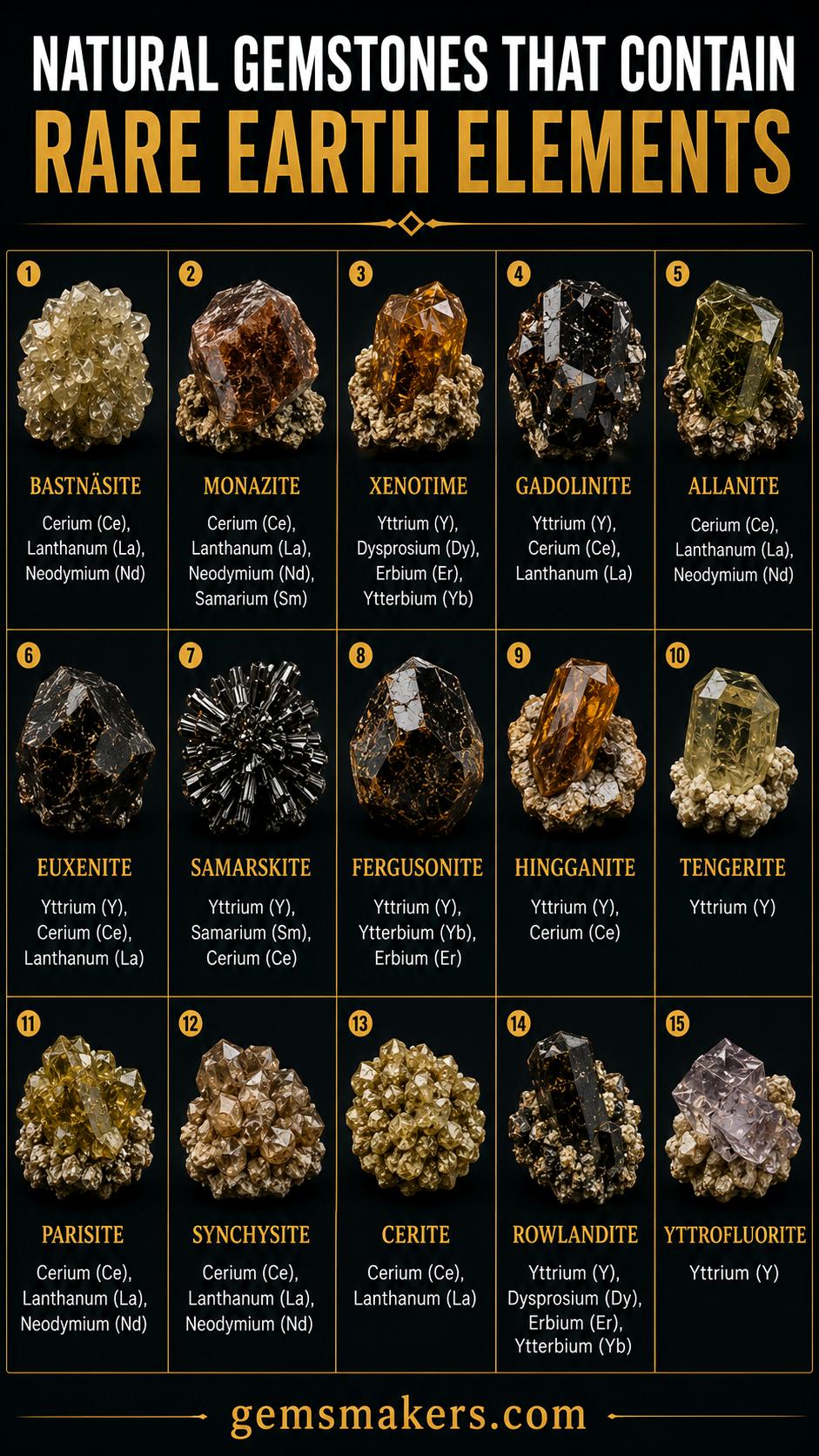
Natural gemstones and collector minerals that contain rare earth elements are some of the most fascinating materials in the mineral world. They are not famous only because of color or sparkle. They are interesting because of what they contain, how they formed, and how uncommon they are in gem quality. Some of these minerals are important ore minerals. Some are rare collector crystals. A few can sometimes be cut or polished, but most are valued more as specimens than as everyday jewelry stones.
Rare earth elements are a group of metals that have special importance in geology, science, technology, and mineral collecting. They are often grouped together because they occur in similar chemical environments and because they are difficult to concentrate into rich deposits. When a gemstone or mineral contains rare earth elements, it often becomes more interesting to collectors and researchers. It may have unusual color, strong crystal habit, high density, unusual luster, or rare origin.
The minerals in this image show that side of gemology very clearly. Bastnäsite, monazite, xenotime, gadolinite, allanite, euxenite, samarskite, fergusonite, hingganite, tengerite, parisite, synchysite, cerite, rowlandite, and yttrofluorite are all part of the rare earth mineral world. Some are bright and glassy. Some are dark and metallic-looking. Some appear as sharp crystals. Others show more massive or compact forms. Together, they show how rich and varied rare earth-bearing minerals can be.
Quick Answer
Rare earth gemstones are natural minerals that contain rare earth elements such as cerium, lanthanum, neodymium, yttrium, dysprosium, erbium, ytterbium, and others. Most of them are collector minerals rather than common jewelry stones. They are important because they are rare, scientifically interesting, and often linked to unusual geology. The minerals shown here include bastnäsite, monazite, xenotime, gadolinite, allanite, euxenite, samarskite, fergusonite, hingganite, tengerite, parisite, synchysite, cerite, rowlandite, and yttrofluorite.
What are rare earth elements?
Rare earth elements are a group of 17 elements. This group includes the 15 lanthanides, plus yttrium and scandium. In geology, rare earth elements are not always truly rare in the Earth’s crust, but they are usually scattered and difficult to concentrate into mineable deposits. That is why they are called “rare earth” elements.
These elements are important in many modern technologies, but they are also important in mineralogy because they appear in a special group of minerals that often form under unusual conditions. Some of these minerals are dark and dense. Some are yellow, brown, or black. Others can be reddish, greenish, or pale. Their chemistry is often complex, and their crystal structures can be very interesting.
In gemology, rare earth-bearing minerals are usually collected for their mineral form, crystal shape, rarity, or scientific value. A few may be cut occasionally, but most are not common jewelry stones. Their real appeal is often their collector identity.
Why rare earth-bearing minerals matter
Rare earth-bearing minerals matter for three reasons.
First, they are scientifically important. They can help geologists understand how certain rocks formed and how rare elements concentrated in the Earth. Second, they are economically important because some of them are sources of valuable rare earth metals. Third, they are visually interesting. Many of them have sharp crystals, strong color, or unusual texture that makes them attractive to collectors.
Some of these minerals are also radioactive or contain radioactive elements in small amounts. That makes them even more interesting to mineral collectors, but also means they should be handled and stored with care. They are often kept as display pieces rather than worn as jewelry.
This is one of the reasons they are so compelling. They sit at the intersection of gemology, mineralogy, and geology. They are both beautiful and informative.
A quick look at the minerals in the image
Mineral Main rare earth elements Typical look Collector appeal
Bastnäsite Cerium, lanthanum, neodymium Yellow, brown, honey, reddish Important REE ore mineral Monazite Cerium, lanthanum, neodymium, samarium Brown to reddish-brown Dense and historically important Xenotime Yttrium, dysprosium, erbium, ytterbium Brown, amber, dark crystals Sharp crystals, rare and valuable Gadolinite Yttrium, cerium, lanthanum Dark green to black Famous collector mineral Allanite Cerium, lanthanum, neodymium Black, brown, greenish-black Common accessory REE mineral Euxenite Yttrium, cerium, lanthanum Black, metallic, dark brown Complex and specimen-worthy Samarskite Yttrium, samarium, cerium Black, dark, shiny Rare and scientifically important Fergusonite Yttrium, ytterbium, erbium Dark brown to black Small but sharp crystals Hingganite Yttrium, cerium Brownish, amber, dark tones Rare collector specimen Tengerite Yttrium Pale, soft, unusual Rare and fragile mineral Parisite Cerium, lanthanum, neodymium Yellow-brown, tan Attractive REE carbonate mineral Synchysite Cerium, lanthanum, neodymium Yellowish-brown, tan Rare and elegant specimen Cerite Cerium, lanthanum Brown, dark, massive Classic cerium mineral Rowlandite Yttrium, dysprosium, erbium, ytterbium Dark, heavy, unusual Very rare collector mineral Yttrofluorite Yttrium-bearing fluorite Pale, yellow, purple, colorless Fluorite-like but chemically unusual
Bastnäsite: one of the most important rare earth minerals
Bastnäsite is one of the best-known rare earth minerals in geology. It is especially important because it contains cerium, lanthanum, and neodymium, which are major rare earth elements used in industry. In the mineral world, bastnäsite is usually seen as a collector or ore mineral rather than a gemstone for daily jewelry use.
Its appearance is often yellow, honey-colored, brown, or reddish-brown. In good crystals, it can look bright and attractive even if it is not a classic faceted gem. The mineral shown in the image has a warm earthy color that matches its identity well. Bastnäsite is valued because it is one of the key sources of rare earth elements, but it also has a strong place in collections because of its crystal habit and density.
Collectors like bastnäsite because it represents the practical side of gemology and mineralogy. It is beautiful, but it is also economically important.
Monazite: a dense and historic rare earth mineral
Monazite is another very important rare earth mineral. It usually contains cerium, lanthanum, neodymium, and samarium. Monazite often appears brown, reddish-brown, or dark tan, and it is known for being dense and heavy. It can occur as small crystals or grains in pegmatites, placer deposits, and metamorphic rocks.
Monazite has a long history in mineral studies because it is one of the classic rare earth minerals. It is also well known because some monazite crystals can contain thorium, which gives them radioactive properties. That has made it interesting to scientists and collectors alike.
In a collection, monazite is not usually admired as a faceted gemstone. Instead, it is appreciated for its weight, chemistry, and crystal form. It is one of those minerals that tells a bigger story about the Earth’s element cycle and rare earth concentration.
Xenotime: a beautiful yttrium-rich crystal
Xenotime is one of the most important yttrium-bearing rare earth minerals. It often contains yttrium along with dysprosium, erbium, and ytterbium. In appearance, xenotime may be brown, amber, honey-colored, or dark and glassy. It can form attractive crystals that are very appealing to collectors.
Xenotime is especially interesting because it often grows in sharp, well-formed crystals. That makes it stand out in specimen collections. It is also geologically important because it shows how yttrium and related elements become concentrated in certain rock environments.
Collectors appreciate xenotime because it is a strong example of a rare earth mineral that combines beauty with scientific value. It is not a common jewelry gemstone, but it is a major mineral in the rare earth world.
Gadolinite: the mineral behind a famous element name
Gadolinite is one of the most historically famous rare earth minerals because the element gadolinium was named after it. It is usually dark green, black, or deep brown, and it often has a vitreous to slightly resinous luster. It contains yttrium and other rare earth elements, along with beryllium and iron.
Gadolinite is valuable to collectors because it is both historically important and visually interesting. Its dark color gives it a strong presence, and good crystals can be very attractive under the right lighting. It is one of those minerals that may not look flashy from a distance, but becomes much more interesting once studied closely.
Its history gives it extra significance. A mineral that helped inspire the naming of an element naturally has an important place in the rare earth story.
Allanite: a common but important REE-bearing mineral
Allanite is a common accessory mineral in many igneous and metamorphic rocks. It often contains cerium, lanthanum, and neodymium. Its appearance is typically dark brown, black, or greenish-black. It may not always be a famous display mineral, but it is very important because it helps carry rare earth elements in the Earth’s crust.
Allanite is interesting because it often appears as an accessory mineral in granite, pegmatite, and metamorphic settings. That means it can be part of the story of how rare earths move through rock systems. For collectors, allanite may not always be the most glamorous mineral on the shelf, but it is a very useful and informative one.
It shows that the rare earth world is not only about flashy crystals. Sometimes the most important minerals are the ones that quietly carry the elements that matter.
Euxenite: complex, dark, and collector-worthy
Euxenite is a complex rare earth mineral that often contains yttrium, cerium, lanthanum, and other elements. It usually appears black, brown, or dark metallic in color. Euxenite is known for being chemically complex, and it is often found as a collector specimen rather than a jewelry material.
What makes euxenite interesting is its combination of density, dark color, and chemistry. It often forms in pegmatitic environments and may contain other elements besides rare earths. This makes it valuable to researchers and collectors who enjoy mineral specimens with complicated histories.
Euxenite is not usually a stone people wear. It is more often a mineral that sits in a display cabinet where its crystal form and deep color can be admired carefully.
Samarskite: a rare and historically important specimen
Samarskite is one of the classic rare earth minerals. It contains yttrium, samarium, cerium, and other elements. It is usually dark, black, or very deep brown and may have a metallic or submetallic look. Like some of the other minerals in this image, it is usually valued as a collector specimen rather than a gem for everyday jewelry.
Samarskite is historically important because it helped expand scientific understanding of the rare earths. It is one of those minerals that appears in conversations about mineral chemistry and the discovery of elements. That historical and scientific value makes it especially interesting.
Collectors often appreciate samarskite because of its density, color, and rarity. It is not flashy, but it is meaningful. That gives it a strong place in the rare earth mineral world.
Fergusonite: sharp crystals and yttrium chemistry
Fergusonite is another yttrium-rich rare earth mineral. It can contain yttrium, ytterbium, erbium, and related elements. It often appears as dark brown to black crystals. Fergusonite is especially attractive to collectors when it forms well-shaped crystals with a clean surface and good luster.
This mineral is important because it occurs in rare earth and niobium-rich environments. That makes it useful both to mineral collectors and to geologists. Its crystal habit can be elegant, even when the color is dark.
Fergusonite is a good example of how some rare earth minerals are admired less for bright color and more for crystal quality and scientific interest. It is a mineral that rewards close looking.
Hingganite: a rare beryllium-yttrium mineral
Hingganite is a rare collector mineral containing yttrium and cerium. It often has a brown, amber, or dark appearance, and it may form in unusual crystal settings. Like many minerals in this group, it is not a standard jewelry gem, but it is highly interesting to collectors who focus on rare mineral species.
Hingganite is one of those minerals that many people outside the mineral world have never heard of. That makes it especially attractive to advanced collectors. Its rarity, chemistry, and crystal form are the main reasons it matters.
This mineral also helps show how varied rare earth-bearing materials can be. Not all of them are bright or transparent. Some are dark, subtle, and scientifically important.
Tengerite: a delicate and unusual yttrium mineral
Tengerite is one of the more unusual minerals in this image. It is associated with yttrium and can appear pale, soft, or delicate in look. Some samples may seem fragile compared with harder, more durable collector minerals. That is part of its appeal.
Tengerite is interesting because it stands out in a group full of dark and heavy minerals. It shows that rare earth minerals can also be light in color and visually quiet. Collectors value minerals like this because they are uncommon and often represent special growth or alteration environments.
Even if it is not widely known in the jewelry market, tengerite is a valuable piece of the rare earth mineral story.
Parisite: a beautiful cerium-bearing carbonate mineral
Parisite is one of the more attractive cerium-bearing minerals in the group. It often contains cerium, lanthanum, and neodymium. Its color may be yellow-brown, tan, or warm earthy tones. Parisite can form elegant crystals and is often admired by mineral collectors for both beauty and rarity.
The mineral is interesting because it belongs to the carbonate-fluoride rare earth family. That chemistry makes it different from many other REE minerals. Collectors often like parisite because it can look refined and crystalline rather than dull or massive.
Parisite is a good example of how rare earth minerals can be visually pleasing even when they are not used in jewelry. Its crystal form and color are enough to make it special.
Synchysite: a subtle but important rare earth mineral
Synchysite is another cerium-bearing carbonate-fluoride mineral. It often contains cerium, lanthanum, and neodymium, and it can appear as yellowish-brown, tan, or pale crystals. Like parisite, it belongs to a rare and specialized part of mineralogy.
Synchysite may not be a famous public gemstone name, but it is important in the rare earth world because it helps geologists understand mineral formation in carbonatite and related deposits. For collectors, good crystals are attractive because of their shape and subtle color.
It is one of those minerals that shows how much variety exists in the rare earth family. Even a mineral that looks modest can be highly important.
Cerite: a classic cerium mineral
Cerite is a classic rare earth mineral associated with cerium and lanthanum. It often appears brown, dark, or massive. It is one of the better-known cerium minerals in the collector and scientific world. Its appearance may not be flashy, but its chemistry is important.
Cerite is a reminder that rare earth minerals are not always gem-like in the usual sense. Some are best understood as ore minerals or scientific specimens. Still, cerite deserves attention because it represents a key part of the cerium-rich mineral family.
Collectors who enjoy the systematic side of mineralogy often appreciate cerite for its historic role and mineral significance.
Rowlandite: a very rare yttrium-bearing mineral
Rowlandite is a very rare rare earth mineral. It often contains yttrium, dysprosium, erbium, and ytterbium. Its appearance can be dark and unusual, and it is usually found as a collector specimen rather than a gemstone for jewelry.
Rare minerals like rowlandite are highly valued by specialists because they are difficult to find and often occur in very limited geological settings. That rarity gives them strong collector appeal. Even though it may not be as visually famous as some other stones, rowlandite is important because it represents the rarest edge of the rare earth mineral world.
Yttrofluorite: fluorite with a rare earth twist
Yttrofluorite is fluorite that contains yttrium. It can look similar to ordinary fluorite in some ways, but its chemistry is different and more unusual. Its color may vary, and it can appear pale, yellowish, purple, or colorless depending on the sample.
This mineral is interesting because it combines the familiarity of fluorite with the chemistry of the rare earth world. That makes it appealing to collectors who enjoy unusual variations on known minerals. Yttrofluorite shows that rare earth influence can appear even in minerals people already know.
It is a good ending point for this image because it bridges two worlds: classic gem minerals and rare earth mineral chemistry.
Are these true gemstones or collector minerals?
Most of these are better described as collector minerals or ore minerals rather than everyday gemstones. A few may be cut or polished occasionally, but the main value is usually scientific, mineralogical, or collector-based. That does not make them less interesting. In many cases, it makes them more interesting.
A gemstone is often thought of as a faceted stone set in jewelry. But the broader gem world includes mineral specimens, rare crystals, and unusual stones that are prized for their natural form. These rare earth-bearing minerals belong to that wider world. They may not sit on most jewelry counters, but they are very important in mineral collections and gem studies.
Why collectors are drawn to them
Collectors are drawn to rare earth minerals for several reasons.
Some like the chemistry. Some like the crystal form. Some like the scarcity. Some like the odd colors and heavy feel. Some enjoy the fact that these minerals tell the story of how rare elements move through the Earth. Others simply enjoy having unusual and uncommon specimens that most people have never seen.
That combination makes the rare earth mineral group especially attractive. It is not just a list of names. It is a collection of natural objects with scientific value, geological meaning, and visual character.
Jewelry use and display value
Although most of these minerals are not common jewelry stones, they still have value in design and display. Some can be polished for collector pieces. Others are best kept as crystal specimens. Their appeal often lies in the natural shape, luster, or unusual color rather than in traditional faceting.
For jewelry buyers, the rare earth mineral world may be less about everyday wear and more about understanding the deeper gem landscape. For collectors, these minerals can be among the most rewarding items to own because they are unusual and often very specific in origin.
Final thoughts
Natural gemstones and collector minerals that contain rare earth elements are a fascinating part of the mineral world. Bastnäsite, monazite, xenotime, gadolinite, allanite, euxenite, samarskite, fergusonite, hingganite, tengerite, parisite, synchysite, cerite, rowlandite, and yttrofluorite all show different sides of rare earth mineralogy. Some are warm and earthy. Some are dark and metallic. Some are pale and delicate. Some are sharp and crystalline. All of them are important.
These minerals matter because they connect beauty, geology, and chemistry. They are collector-worthy not only because they are rare, but because they help explain how the Earth concentrates valuable elements in special rocks and deposits. That makes them much more than decorative stones. They are natural records of rare chemistry and unusual geological conditions.
For anyone who loves gemstones, these minerals open the door to a deeper part of the gem world. They are proof that some of the most interesting stones are not the most famous ones. They are the ones with the most unusual stories inside them.
Looking for natural loose gemstones, collector stones, and jewelry-grade gems?
← Back