Sedimentary Gemstones Explained: Amber, Jet, Opal, Petrified Wood, Ammolite, and Pearl
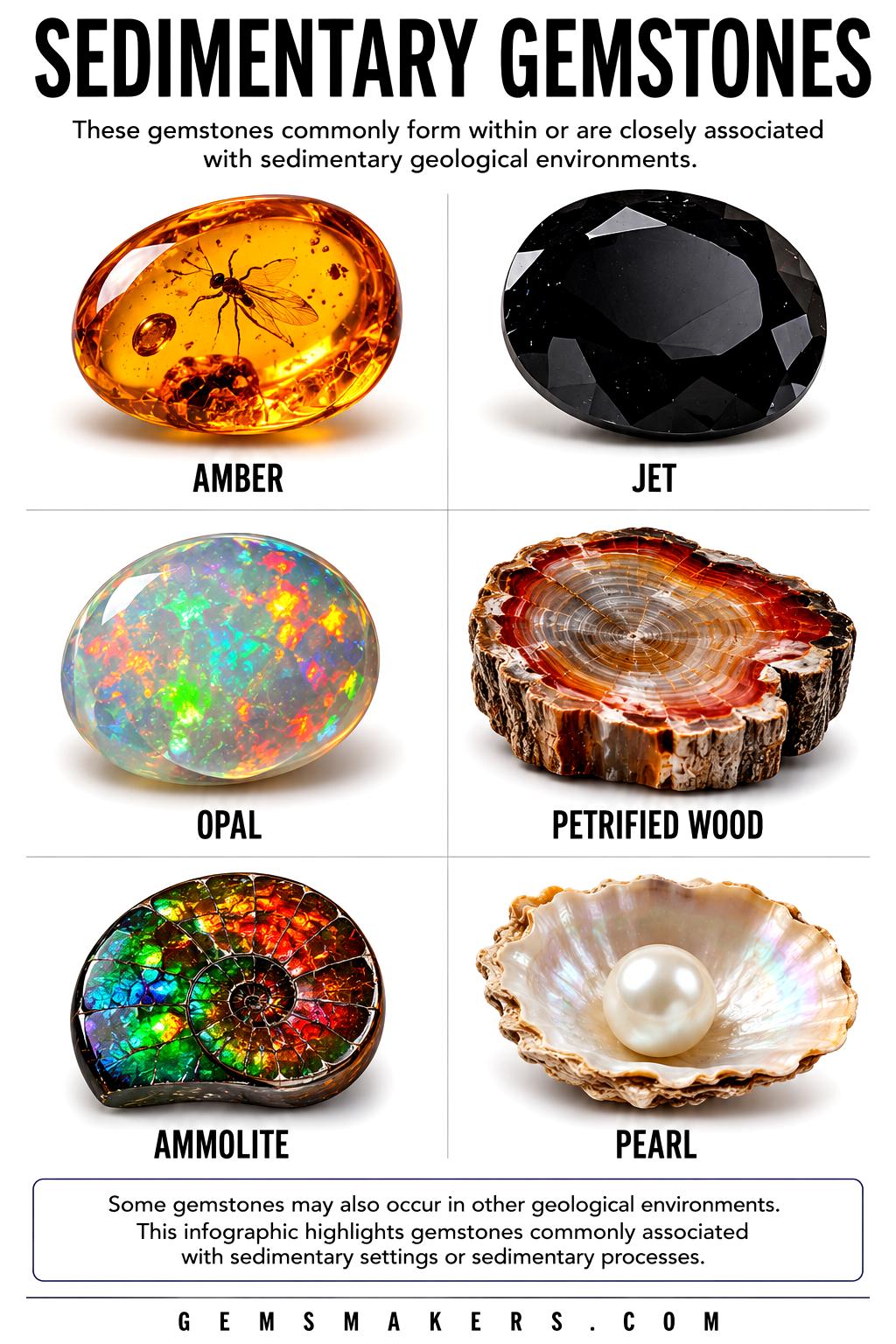
Sedimentary gemstones are gemstones that commonly form within or are closely associated with sedimentary geological environments. They are connected to layers, burial, pressure, water, organic material, and long periods of natural change. Some are formed from ancient living material. Some are created when dissolved minerals fill spaces in rock. Some are fossils turned into gem material. Others are organic treasures shaped by sedimentary processes over millions of years. That is what makes sedimentary gemstones so fascinating. They are not just beautiful. They are natural records of life, burial, water, and time.
The gemstones shown here, including amber, jet, opal, petrified wood, ammolite, and pearl, represent some of the best-known materials associated with sedimentary settings. Some of them may also occur in other geological environments, but they are commonly linked to sedimentary processes. That connection gives them a special place in both gemology and collecting. These are stones that often carry a sense of history, memory, and transformation. They are formed slowly, sometimes from ancient trees, ancient shells, or mineral-rich waters trapped in sedimentary layers.
Quick Answer
Sedimentary gemstones are gems that form in or are closely associated with sedimentary environments. Amber, jet, opal, petrified wood, ammolite, and pearl are classic examples. They are valued because sedimentary processes can preserve organic material, create unusual colors, and produce unique patterns and textures.
What Makes a Gemstone Sedimentary?
Sedimentary environments are formed by the accumulation of material over time. This can include sand, mud, shells, plant material, and minerals carried by water. Over long periods, layers build up, compact, and sometimes harden into rock. In these settings, gemstones may form in several different ways. Some are created from organic material that has been preserved and transformed. Some are mineral deposits formed from groundwater or seawater. Some are fossils that have turned into gem-quality material. Some are biologically produced but later preserved in sedimentary layers.
This is very different from igneous gemstones, which form from magma or lava, and metamorphic gemstones, which form under heat and pressure. Sedimentary gemstones are often tied to the surface or near-surface world. They may come from forests, ocean life, lakes, or burial in sedimentary rock layers. Because of that, they often have more visible links to life and ancient environments than many other gem types.
Amber: fossil resin turned into gem material
Amber is one of the best-known sedimentary gemstone materials in the world. It is fossilized tree resin, not a mineral in the strict sense, but it is still widely treated as a gemstone because of its beauty, polish, and use in jewelry. Amber forms when resin from ancient trees hardens and is buried over time. As it ages, it becomes stable, translucent, and often rich in warm colors such as yellow, orange, honey, cognac, and brown.
Amber is especially famous because it can trap ancient insects, plant matter, or other tiny inclusions. These inclusions make it extremely interesting to collectors and scientists. A piece of amber can feel like a small window into the ancient past. It is one of the most direct links between gemstones and prehistoric life.
Amber is also admired for its light weight and smooth warmth. It feels different from most mineral gemstones. It is softer than hard gemstones like sapphire or diamond, but its organic origin makes it special. In jewelry, amber is often used in pendants, beads, earrings, and carved pieces. It has a natural glow that makes it immediately recognizable.
Jet: black organic gemstone from ancient wood
Jet is another organic gemstone strongly linked to sedimentary environments. It forms from fossilized wood that has undergone compaction and chemical change over long periods of time. Jet is typically black, smooth, and light in weight. It has a deep, polished appearance that makes it especially attractive in carved jewelry and historic pieces.
Jet has a long history in jewelry and mourning jewelry in particular. Its black color made it popular in the 19th century, but it remains valued today for its classic appearance and organic origin. Like amber, jet is not a mineral in the traditional sense. It is a gemstone material that reflects the transformation of ancient organic matter under burial conditions.
Collectors appreciate jet because it is simple, elegant, and historically important. It may not sparkle like a faceted gem, but its smooth black surface gives it a very refined look. It is one of the most recognizable sedimentary gemstone materials because it comes directly from ancient plant life preserved through geological time.
Opal: the iridescent wonder of sedimentary silica
Opal is one of the most famous gemstones associated with sedimentary environments. It is a hydrated form of silica and often forms in spaces within sedimentary rocks. It can appear in many forms, including precious opal, common opal, black opal, white opal, fire opal, and boulder opal. Some opals display brilliant play-of-color, which is the shifting flash of spectral colors seen when the stone moves in light.
Opal is especially loved because no two stones are exactly the same. Its color patterns can be subtle or dramatic, and the stone can look almost magical when it flashes color. Many opals are associated with ancient water systems, silica-rich solutions, and sedimentary host rocks. That gives them a very strong link to geological deposition and underground chemistry.
Opal is also important because it can show both beauty and fragility. It is softer and more delicate than many other gemstones, so it needs careful handling. But when well protected and well cut, it can become one of the most striking stones in a collection or jewelry piece. Sedimentary opal is one of the clearest examples of a gemstone formed through water and time.
Petrified Wood: fossil wood turned to stone
Petrified wood is one of the most visually interesting sedimentary gemstone materials. It forms when wood is buried and mineral-rich water slowly replaces the original organic structure with stone. The result is a material that often preserves the shape, grain, and texture of the original wood while turning it into hard mineral matter.
Petrified wood is admired because it combines the appearance of wood with the durability of stone. It can show amazing color patterns depending on the minerals that replaced the original material. Reds, browns, yellows, blacks, and even greens can appear in petrified wood. These colors make it popular for cabochons, carvings, display specimens, and collector pieces.
What makes petrified wood so special is that it is both geological and biological at the same time. It records the shape of ancient wood while also becoming mineralized through sedimentary or groundwater processes. This gives it a story that few other gemstones can match. It is one of the strongest examples of a gemstone that truly comes from the fossil record.
Ammolite: fossil shell with brilliant color
Ammolite is one of the most spectacular sedimentary gemstone materials. It comes from the fossilized shells of ammonites, ancient marine animals. The shell material can display brilliant iridescent colors such as green, red, orange, blue, and gold. These colors come from the unique layered structure of the shell and the way light interacts with it.
Ammolite is admired because it looks almost like a mosaic of color. It has a strong collector appeal and is highly valued when the play-of-color is intense and the material is stable enough for use in jewelry. Because it comes from fossils, it is directly linked to sedimentary deposition and ancient marine environments.
Ammolite is one of the most colorful and dramatic stones in this category. It is not common, and it has a very distinct look. For collectors, it is one of the most exciting gemstone materials associated with sedimentary life and preservation. For jewelry buyers, it offers something bold and unusual.
Pearl: organic beauty formed in living shells
Pearl is another gem material commonly associated with sedimentary settings and organic processes. It forms inside mollusks and is built from layers of nacre, which create the smooth, glowing surface pearls are known for. Pearls are not minerals in the same way quartz or sapphire are minerals, but they are still among the world’s most treasured gem materials.
Pearls are loved because of their soft luster, organic origin, and elegant appearance. They can be white, cream, pink, silver, gold, black, or many other shades. Their beauty comes from layering and light reflection rather than faceting. In jewelry, pearls have a timeless place in necklaces, earrings, rings, and bracelets.
Pearls are not formed in sedimentary rock in the same way opal or petrified wood are, but they are part of the broader world of sedimentary-related and biologically formed gem materials. They are included here because they come from living organisms that are tied to aquatic and sedimentary environments. Their connection to natural shell growth makes them a perfect fit in a discussion of organic gemstone materials.
Why these gemstones are so interesting to collectors
Collectors are drawn to sedimentary gemstones because they often preserve evidence of life or ancient environments. Amber may contain insects. Petrified wood may preserve the shape of a tree. Ammolite comes from fossil shells. Pearl comes from living organisms. Jet comes from ancient wood. Opal reflects mineral deposition in sedimentary rock. Each stone carries a record of change, burial, and preservation.
This makes them different from many other gemstone families. They are not just beautiful crystals. They are natural archives. A collector looking at these stones is also looking at ancient forests, ancient seas, ancient resin, and ancient sediment layers. That gives them a very deep story and makes them highly appealing to both gem lovers and scientists.
Jewelry uses for sedimentary gemstones
Sedimentary gemstones can be used in many kinds of jewelry. Amber is popular in pendants, beads, and carved pieces. Jet is often used in black jewelry designs and historical styles. Opal is widely used in rings, earrings, and pendants. Petrified wood is excellent for cabochons and statement jewelry. Ammolite is often used in high-end designer pieces because of its brilliant color. Pearls remain one of the most classic and versatile jewelry materials in the world.
The main challenge with some sedimentary gemstones is durability. Amber, opal, and pearl are softer than harder gemstones like sapphire or diamond. That means they need more care. But they remain extremely desirable because of their beauty and character. Petrified wood and jet are often more durable in certain forms, while ammolite often needs protection in jewelry settings. Each stone has its own strengths and limits.
How to think about value
Value in sedimentary gemstones depends on the type of stone. For amber, inclusions, color, clarity, and age matter. For jet, polish, quality, and historical interest matter. For opal, play-of-color, brightness, pattern, body tone, and stability matter. For petrified wood, color, pattern, and preservation matter. For ammolite, color brilliance and quality of surface matter. For pearl, luster, shape, size, surface quality, and origin matter.
Collectors often pay attention to rarity and beauty together. A stone with strong color, interesting pattern, or fossil content can be much more valuable than a plain example. Sedimentary gemstones are especially interesting because many are judged not only as jewelry stones but also as natural history objects.
The story behind sedimentary gemstones
One of the best things about sedimentary gemstones is that they tell stories. Amber tells the story of ancient tree resin. Jet tells the story of ancient wood. Opal tells the story of silica and water in sedimentary rock. Petrified wood tells the story of fossilized forests. Ammolite tells the story of ancient marine life. Pearl tells the story of living shells and nacre formation. These stones are beautiful, but they are also chapters in Earth history.
That story is one reason they remain popular in both the gem trade and the collector market. People are naturally drawn to objects that have meaning, and sedimentary gemstones are full of meaning. They connect beauty with memory, and material with time.
Final thoughts
Sedimentary gemstones are among the most interesting gemstones in the world because they are connected to layers, burial, water, fossils, and organic transformation. Amber, jet, opal, petrified wood, ammolite, and pearl each show a different side of this story. Some are fossilized tree resin. Some are fossilized wood. Some are shell material. Some are mineral deposits formed in sedimentary rocks. All of them carry a sense of Earth history that makes them deeply appealing.
These gemstones remind us that beauty can come from the slow work of time. Sedimentary environments do not always look dramatic on the surface, but they can produce some of the most memorable gem materials on Earth. Their value comes from color, pattern, origin, and the natural story they preserve. That is what makes sedimentary gemstones so special.
Looking for natural loose gemstones, collector stones, and jewelry-grade gems?
← Back